How to Style a Banarasi Saree for Weddings and Festivals
Style a Banarasi by letting the brocade show. Choose a blouse that matches the formality, jewellery that sits away from the main border, and a drape you have practised. Weddings can take a richer blouse; many festivals look better with a simpler one.
What you are styling
A Banarasi, in the traditional sense, is a brocaded silk from the Varanasi weaving tradition, often with zari and floral or jaal patterns. A saree sold as Banarasi may be handwoven or a later interpretation. Read the product description for the fabric and weave instead of assuming every piece is the same.
Blouse and drape
A plain or lightly worked blouse in a colour taken from the border keeps the saree as the focus. For the drape, set even pleats and decide where the pallu will sit before you add jewellery. The modern draping guide covers pleats and pallu styles you can rehearse at home.
Wedding versus festival
- Wedding: a blouse with a modest neckline you can wear for the ritual, and jewellery that does not snag the zari.
- Festival: you can lighten the jewellery and choose footwear you can stand in for several hours.
- Both: pin the pallu where it rubs a bag or a garland.
Jewellery, footwear and colour
Gold-toned jewellery is a common pair because it echoes zari, but it should not cover the border you want photographed. Choose footwear with a secure strap. If you are still choosing the saree, start with the wedding guide and then return to styling.
Wedding sarees from the current collection
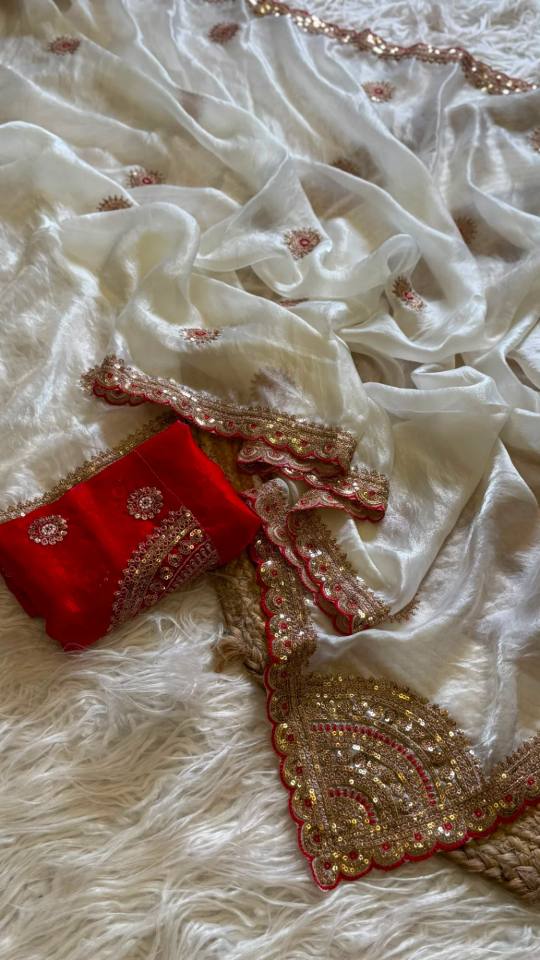
Party Wear & Designer Sarees
Premium Space Silk Designer Party Wear Saree With Heavy Sequin Work And Contrast Blouse
₹1,999₹4,20052% off
In stock
- White
- Aqua blue
- Rani
- Red
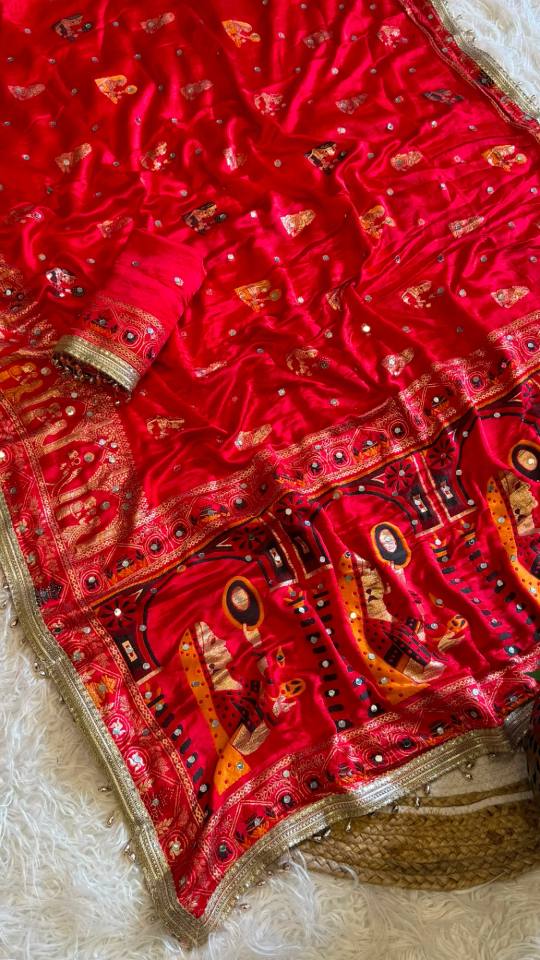
Traditional & Silk Sarees
Premium Red Gaji Silk Saree with Traditional Pichwai Border & Mirror Work
₹2,399₹3,99940% off
In stock
- Red
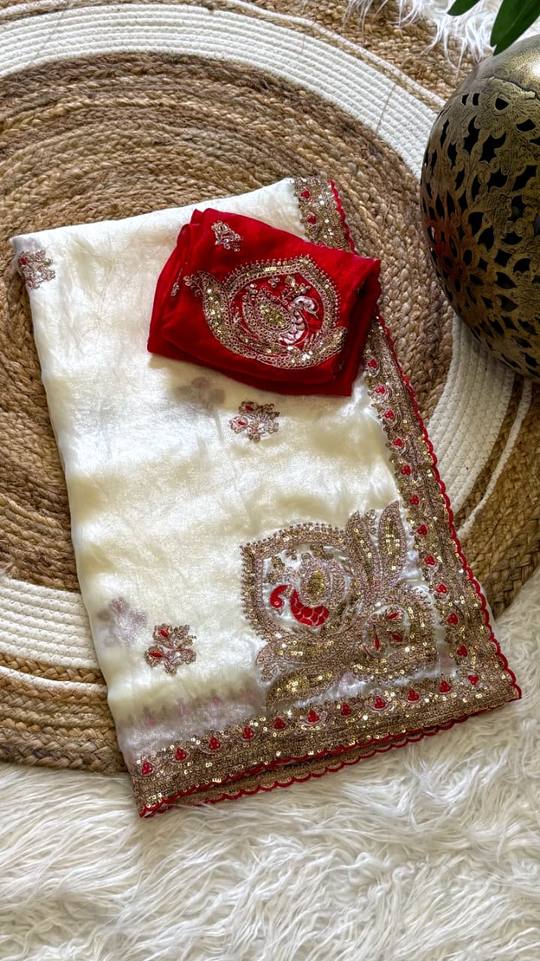
Party Wear & Designer Sarees
Premium Space Silk Designer Saree with Heavy Sequins & Peacock Embroidery
₹1,999₹5,20062% off
In stock
- White
- Red
- Aqua blue
- Rani
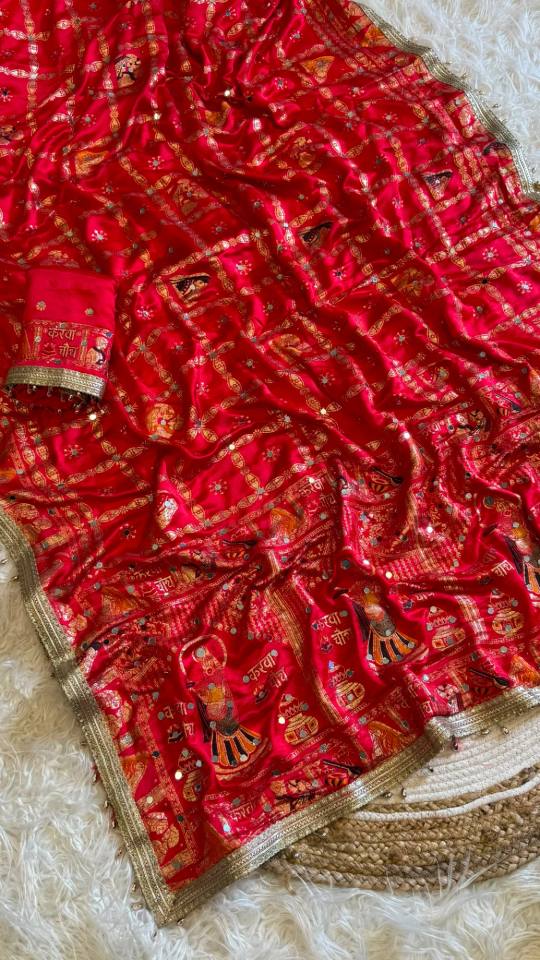
Party Wear & Designer Sarees
Premium Gaji Silk Red Karwa Chauth Special Saree With Mirror Work
₹2,399₹5,60057% off
In stock
- Red
Should a Banarasi blouse be heavily embroidered?
Not always. If the saree body is already dense, a quieter blouse makes the weave easier to see.
Can I wear a Banarasi for a daytime festival?
Yes. Prefer a drape and blouse you can wear in the heat, and avoid stacking jewellery that catches on the zari.
How should I store it after the function?
Air it, refold on a new line, and follow the care label. See the care guide for silk and zari.